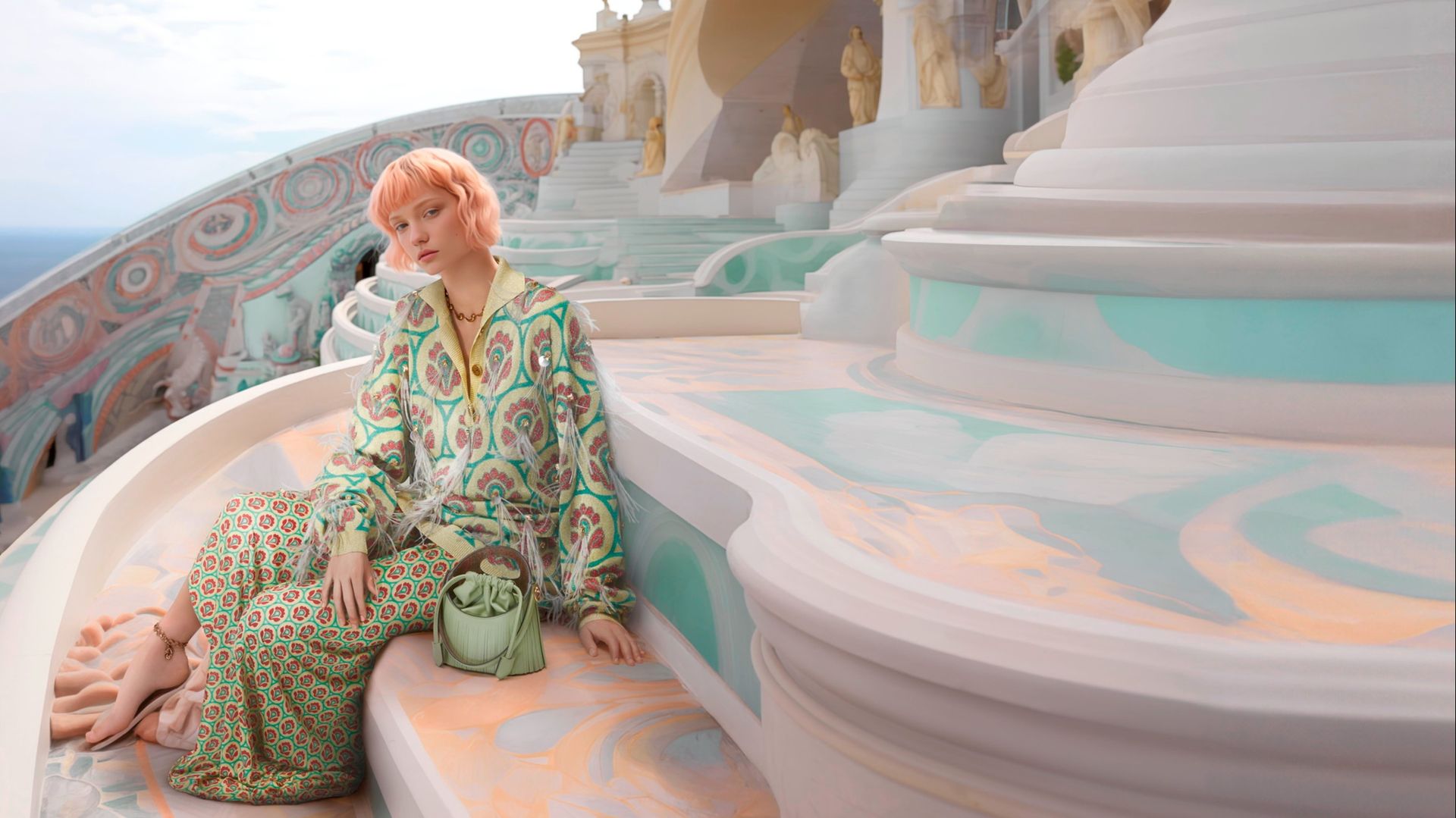
Inside a cavernous photography studio in north London, large-scale prints from handbag brand Misela’s latest campaign hang from a pipe grid overhead. In one, a blonde model sits on a cognac-leather sofa next to a black-and-grey tote, a classic Manhattan skyscraper scene visible through the windows behind her. Another features a black-gowned woman perched in a Venetian gondola on a misty Grand Canal. Guests pause in front of the pairings and murmur about the lighting, the settings, the bags, until someone smiles and leans in to make the big reveal: “Amazing, isn’t it? And you know, it’s all AI.”
Artificial intelligence, increasingly used in fashion when it comes to search, ecommerce and customer service, is making inroads into marketing. Models walking Coperni’s show at Paris Fashion Week last September wore Humane’s AI Pin, a wearable multi-modal device with communications, image-capturing and digital assistant applications. Brands including Etro, Moncler, Mango, Valentino, Pandora, Revolve and Misela have used generative AI to promote new collections and create conversation-starting images. More recently, AI influencers have become a flashpoint for conversations about inclusion and representation in fashion media.